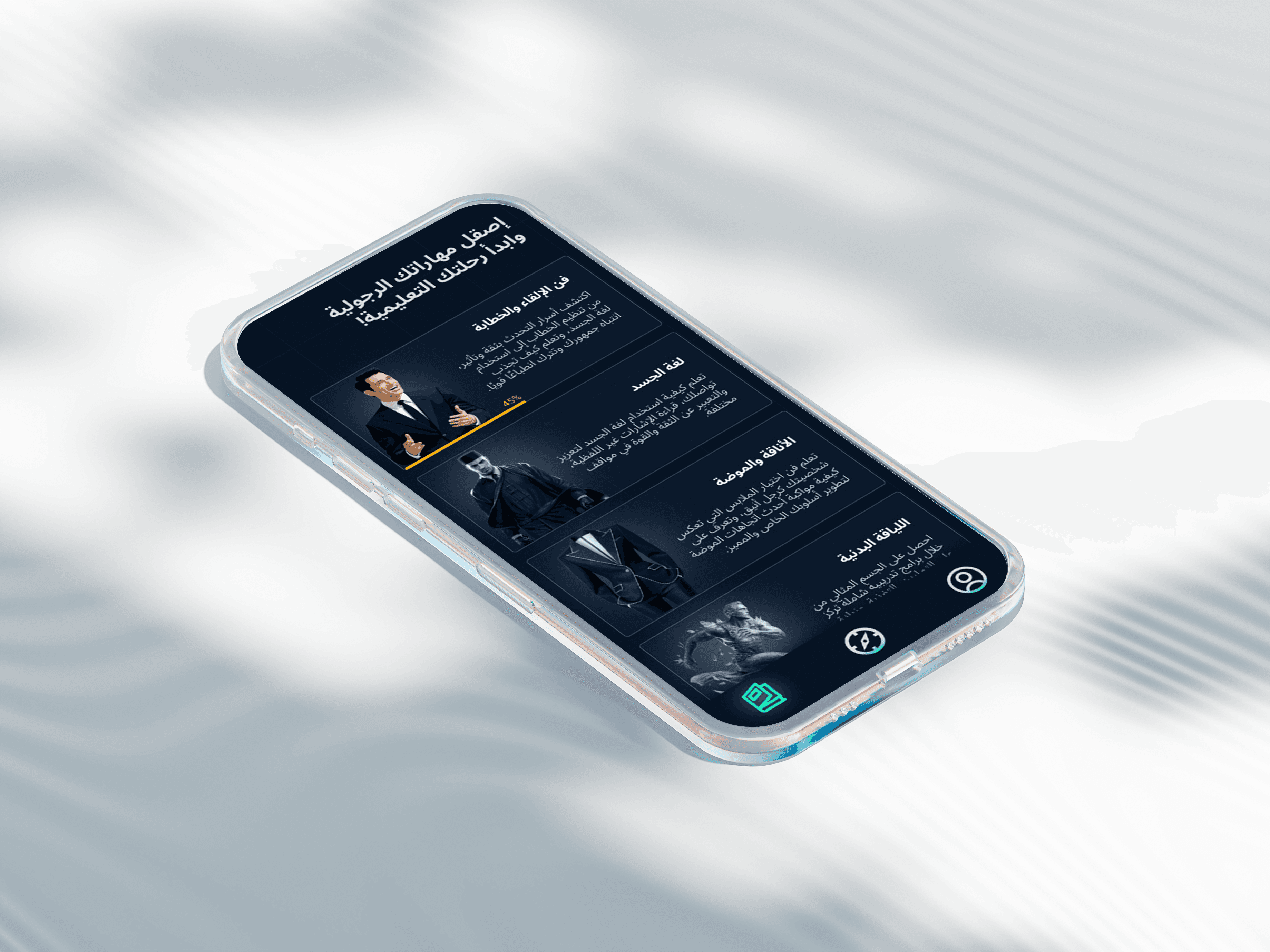
Azem — Self-Improvement App
Overview
Azem is a behavior-driven self-improvement app designed specifically to help men turn knowledge into action. Unlike content-heavy platforms that leave users overwhelmed, Azem focuses on structured, actionable steps grounded in behavioral psychology.
The Challenge
The self-improvement space is crowded with content — podcasts, books, videos, courses. But consumption doesn't equal transformation. Most men know what they should do; the gap is execution. The challenge was designing a product that bridges that gap — turning passive learning into active doing.
My Role
I designed the complete mobile experience — from user flows and wireframes to high-fidelity UI and interactive prototypes. The work was deeply informed by behavioral science, ensuring every screen and interaction was built to support habit formation and follow-through.
Approach
Behavioral design at the core
Azem isn't just designed to look good — it's designed to change behavior. We incorporated principles from BJ Fogg's Behavior Model, habit stacking techniques, and commitment devices. The UI rewards progress, reduces friction, and makes the next step always visible.
Simplicity as a feature
Self-improvement apps often overwhelm users with features. Azem takes the opposite approach: one focus area at a time, one action per day, clear progress tracking. Less is genuinely more when the goal is consistency.
Dark, focused aesthetic
The visual direction uses a dark palette with amber accents — intentionally different from the bright, busy aesthetic of competing apps. The design signals focus, seriousness, and calm — matching the mental state users want to cultivate.
Key Features
- Daily action prompts with progressive difficulty
- Habit streak tracking with visual rewards
- Reflection journaling integrated into the flow
- Minimal, distraction-free interface
- Community accountability opt-in